13 October 2026 · 10 min read · By McKenna Starck
Mad scientist mode: ON
Øyvind Lindgjerdet has built a career by following curiosity a little too far, in the best way. At Britannia, cocktails become part chemistry, part art, part storytelling, with the occasional detour into dry ice, 3D artwork and hand-painted glassware.
- Food & Drink
- Arts & Culture
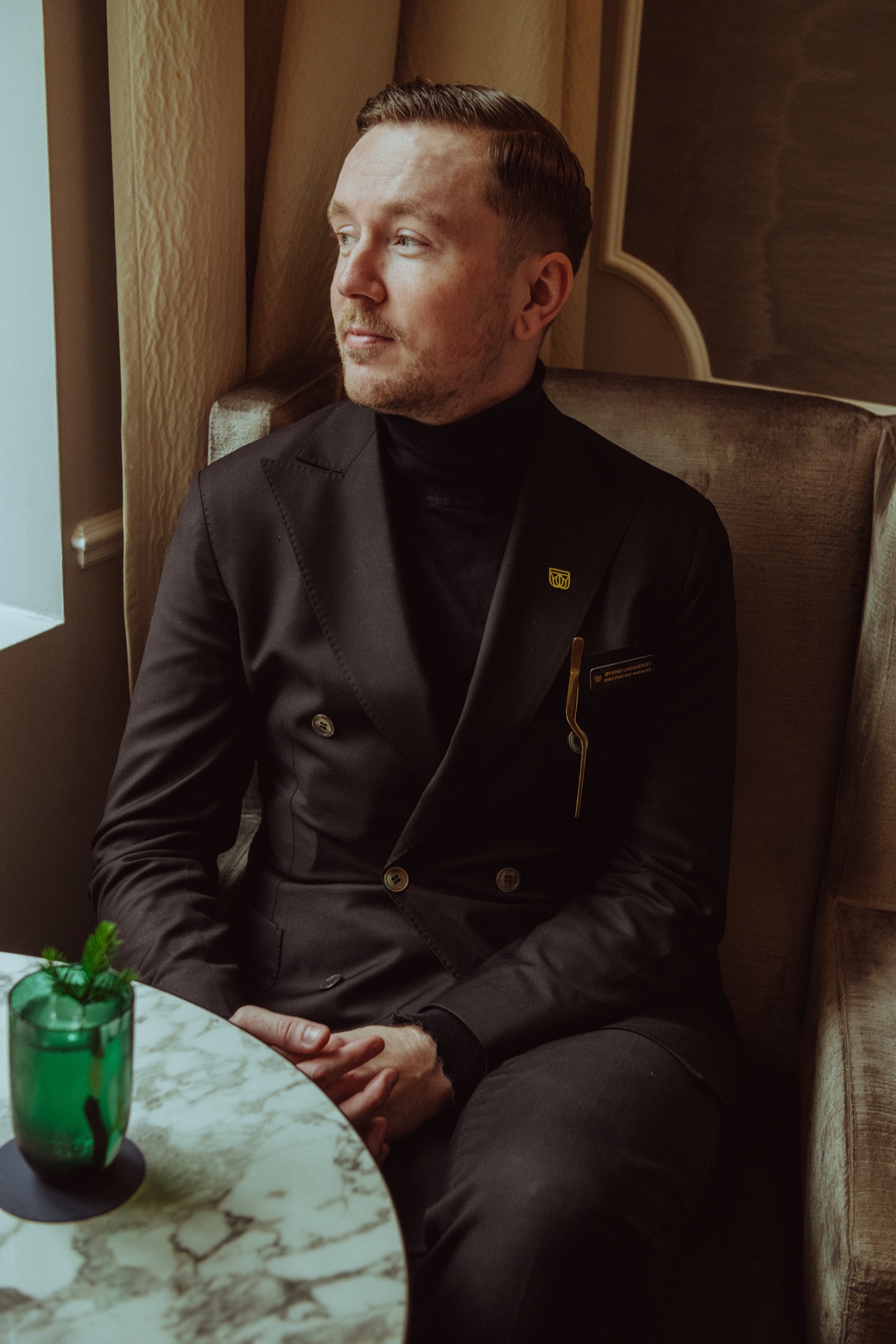
Øyvind Lindgjerdet, Britannia Hotel Trondheim. Photo: Nikol Herec
Blending flavor, art and storytelling.
No straight line
Øyvind Lindgjerdet did not grow up dreaming about cocktails. There was no formative martini, no teenage fixation on obscure spirits, no elegant little origin story waiting to be discovered in hindsight. He liked language, history and art, did well at school when the mood struck, and mostly wanted to get on with the business of becoming someone. So he chose the practical route and trained to become an electrician, largely because his father had been one. It was sensible. It had precedent. It also had considerably more schematics than romance.
“In high school, I did well when I wanted to, but I was only really interested in language, history and art. I wanted to work. I needed something real. So I decided to go to trade school to become an electrician, just because my dad had done it and ran his own shop. I didn’t research it. I had no idea what it actually meant.”
He found out soon enough. Less than a year later, he tapped out. The work was precise in all the ways he wasn’t looking for, a language of measurements and diagrams when what interested him was texture, instinct, people. His mother and sister suggested culinary school instead, not with the gravity of a life-changing intervention, but almost casually. Sometimes the right door has very little ceremony around it.
Øyvind Lindgjerdet, Britannia Bar. Photo: Nikol Herec
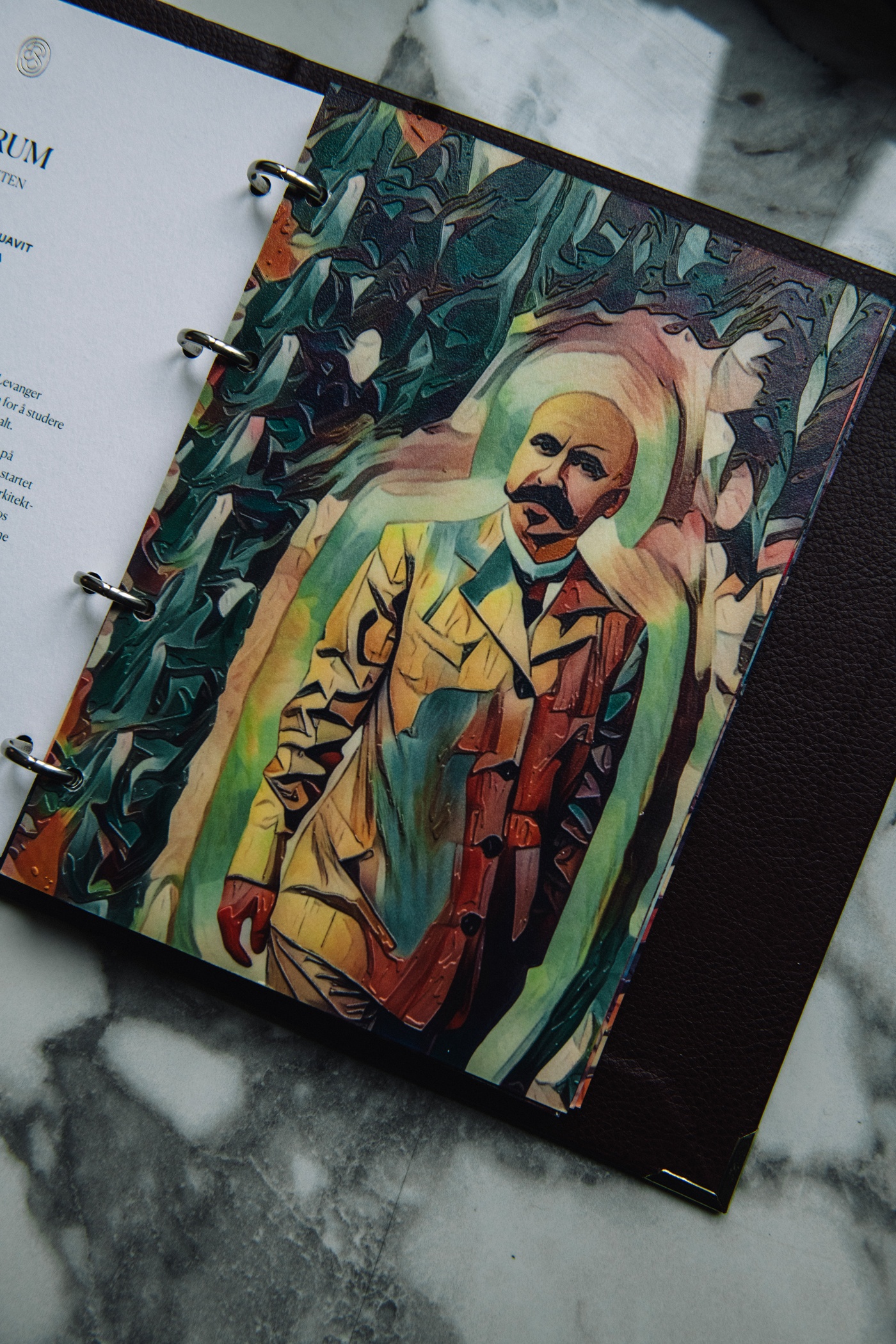
Britannia Bar menu artwork by Øyvind Lindgjerdet. Photo: Nikol Herec
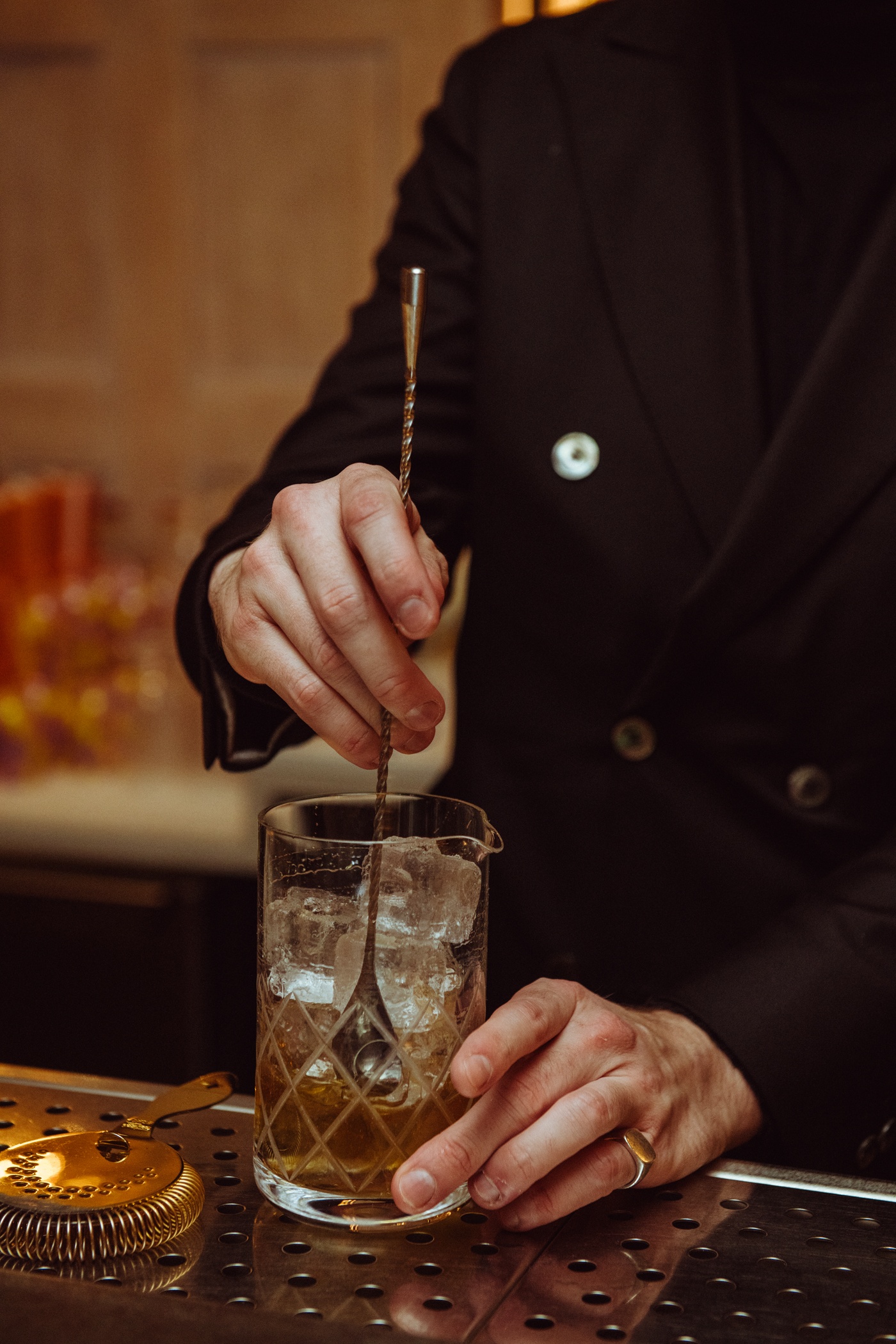
Øyvind Lindgjerdet, Britannia Bar. Photo: Nikol Herec.
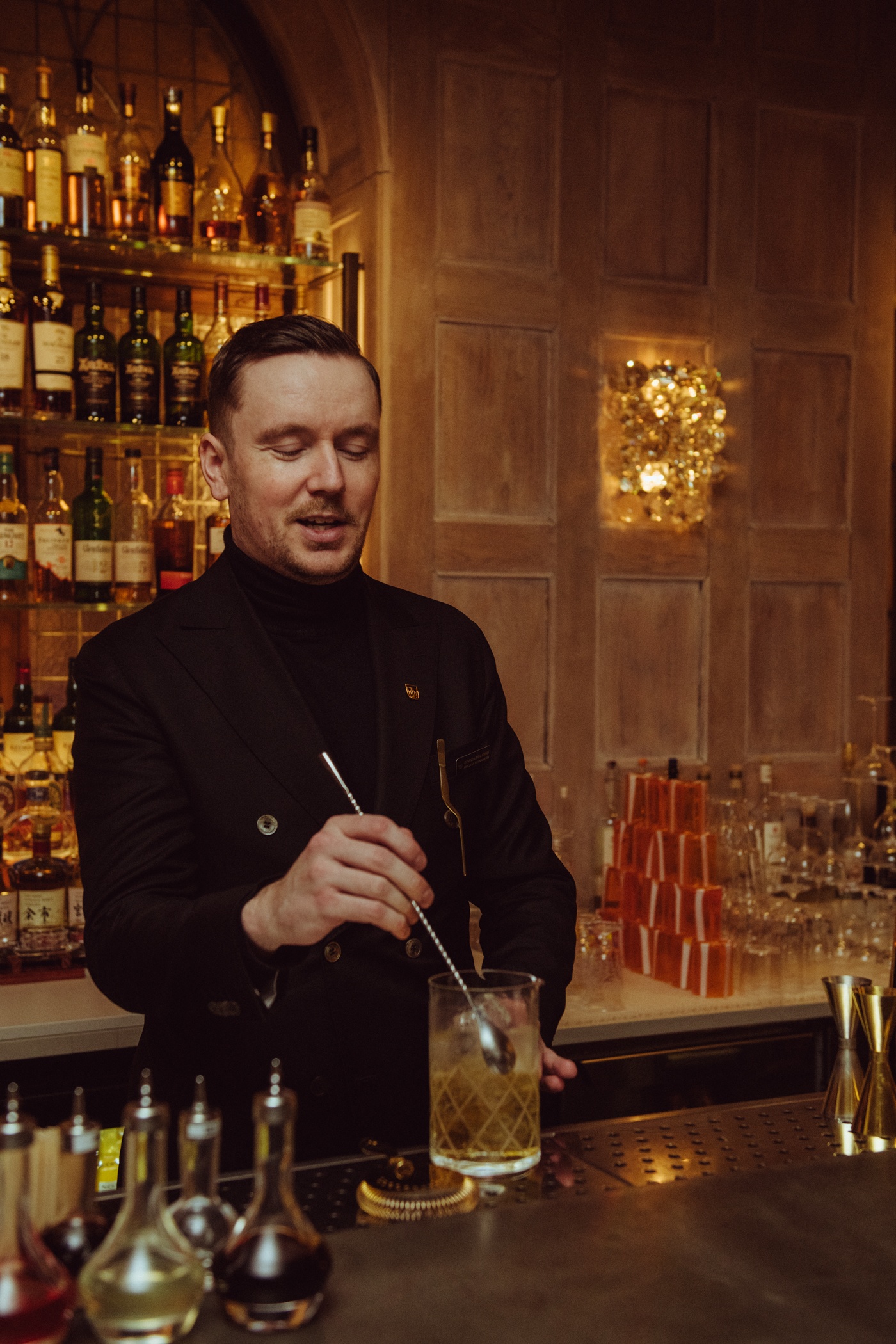
Øyvind Lindgjerdet, Britannia Bar. Photo Nikol Herec
For the first time, learning had weight. One week he was butchering, the next baking, then waiting tables. Things had heat and timing. They could split, burn, curdle, collapse. They asked something of your hands. After years of absorbing information because that was what school required, Øyvind had found a version of learning that pushed back.
“Culinary school was the first time I truly enjoyed learning. It was practical. It was physical.”
His sister was already working in hospitality and, in the way older siblings sometimes alter the course of your life without making a speech about it, pulled him closer to the bar. At seventeen, he started with coat check and barbacking, still too young to serve. It turned out to be a useful position for someone who watches closely. He came in on days off, learned the recipes, practiced his shake, studied how the team moved when the room filled up. There was a choreography to it, but never quite the same dance twice.
By twenty, he was behind the bar himself. The attraction was immediate. The pressure suited him. So did the noise. A bar could be elegant from the other side of the counter and sort of controlled chaos from his side, which was part of the appeal. But somewhere between the bottles, the ice and the rush of a full room, he realized the drink was not actually the most interesting thing happening.
“I loved the social vibe and the chaos behind the bar. The adrenaline, the pressure, the people. I realized I didn’t just love making drinks. I loved making someone’s night.”
That was the shift. Not some grand revelation about his future, just the first time the work seemed to hold all the things he had been circling without naming: pace, craft, people, instinct, and the satisfaction of making something land in real time. For someone who had started out with no real plan, that was more than enough to keep following.
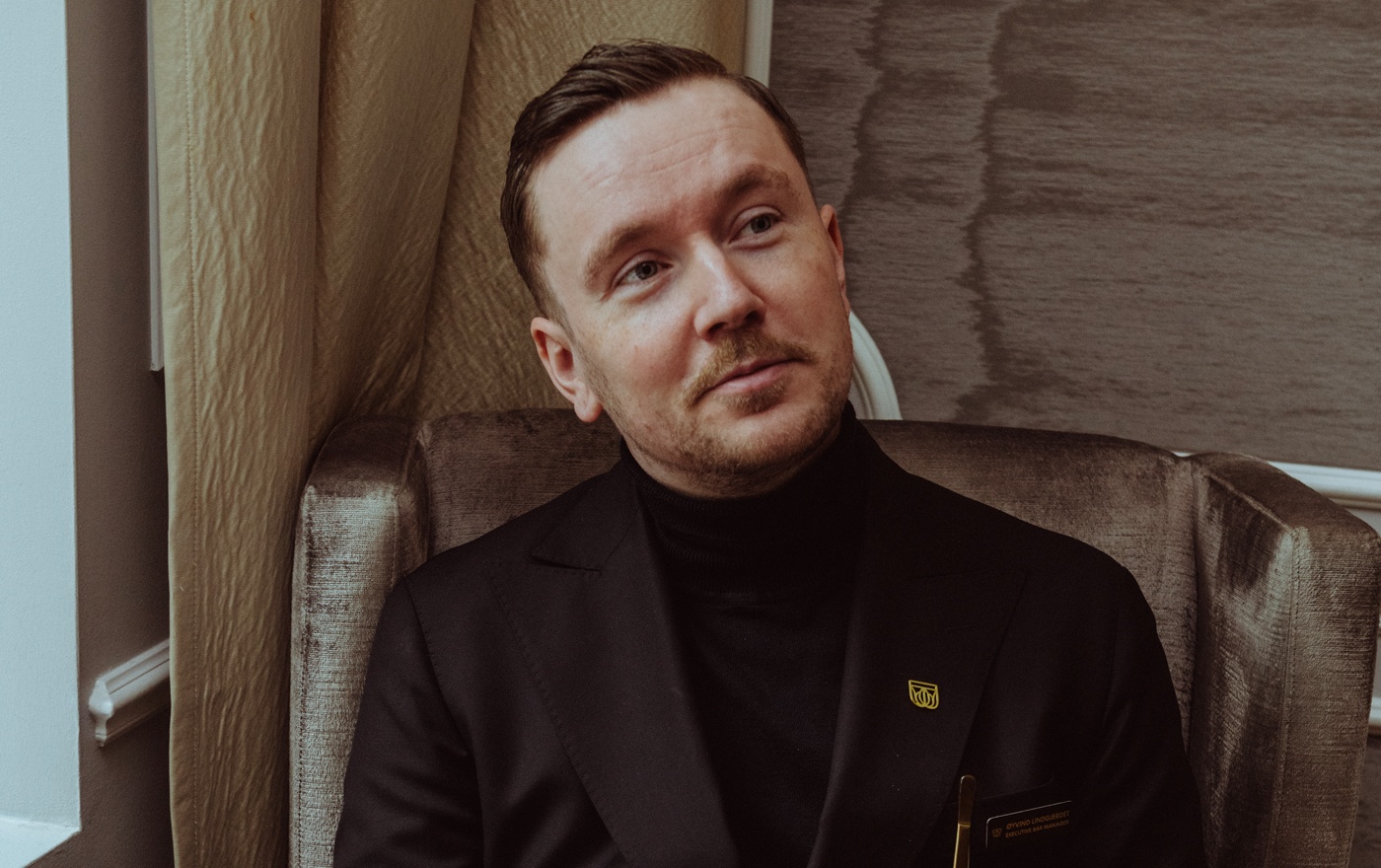
Øyvind Lindgjerdet, Britannia Bar. Photo: Nikol Herec
Down the rabbit hole
By the time Øyvind arrived at restaurant, NordØst, in his mid-20s, bartending had already stopped being just a job. He had started pulling at the loose threads. Why does this spirit taste the way it does? What changes when you distill it differently? Why does one ingredient behave beautifully in a glass and another completely hijack the room? The questions multiplied quickly, and Øyvind, once interested, has never been particularly good at leaving a subject alone.
NordØst was the point where that curiosity sharpened. He started reading about spirits, then distillation, then wine, then food chemistry. One thing kept opening into another. The deeper he went, the less interested he became in simply making a good drink. He wanted to understand the mechanics underneath it, why something worked, why it failed, and what might happen if you pushed it just past the point of being obvious. As he puts it, “I realized, If I want to lead. I have to know more. I fell in love with reading because I was diving into a theme I loved.”
That instinct came with side effects. At NordØst, Øyvind started experimenting with seaweed, dry ice and techniques that, at the time, were not exactly standard Trondheim bar fare. Some guests loved it. Some probably wondered what had happened to ordering a normal drink. Looking back, he seems to know exactly where the line was.
“The flavors were there, but the presentation might’ve been too niche for Trondheim back then. Guests still tell me they miss it. It wasn’t for everyone, but it made an impression.”
- Øyvind
That last sentence could probably follow a few chapters of his career. Øyvind has never seemed especially interested in novelty for novelty’s sake, but he does like seeing what happens at the edge of an idea. Give him a concept and he will pull it apart, turn it over, research three adjacent subjects and come back with something that has somehow acquired a historical reference, an unexpected ingredient and a production problem that now needs solving.
This is where the mad scientist label starts to feel less like a joke and more like a fairly accurate working method. The laboratory just happens to have better glassware. And yet, even then, the experimentation was never really about showing how clever the bartender could be. The best ideas still had to survive contact with an actual guest. For all the technical curiosity, Øyvind was learning something equally important at the same time: complexity only matters if it creates a better experience on the other side of the bar.
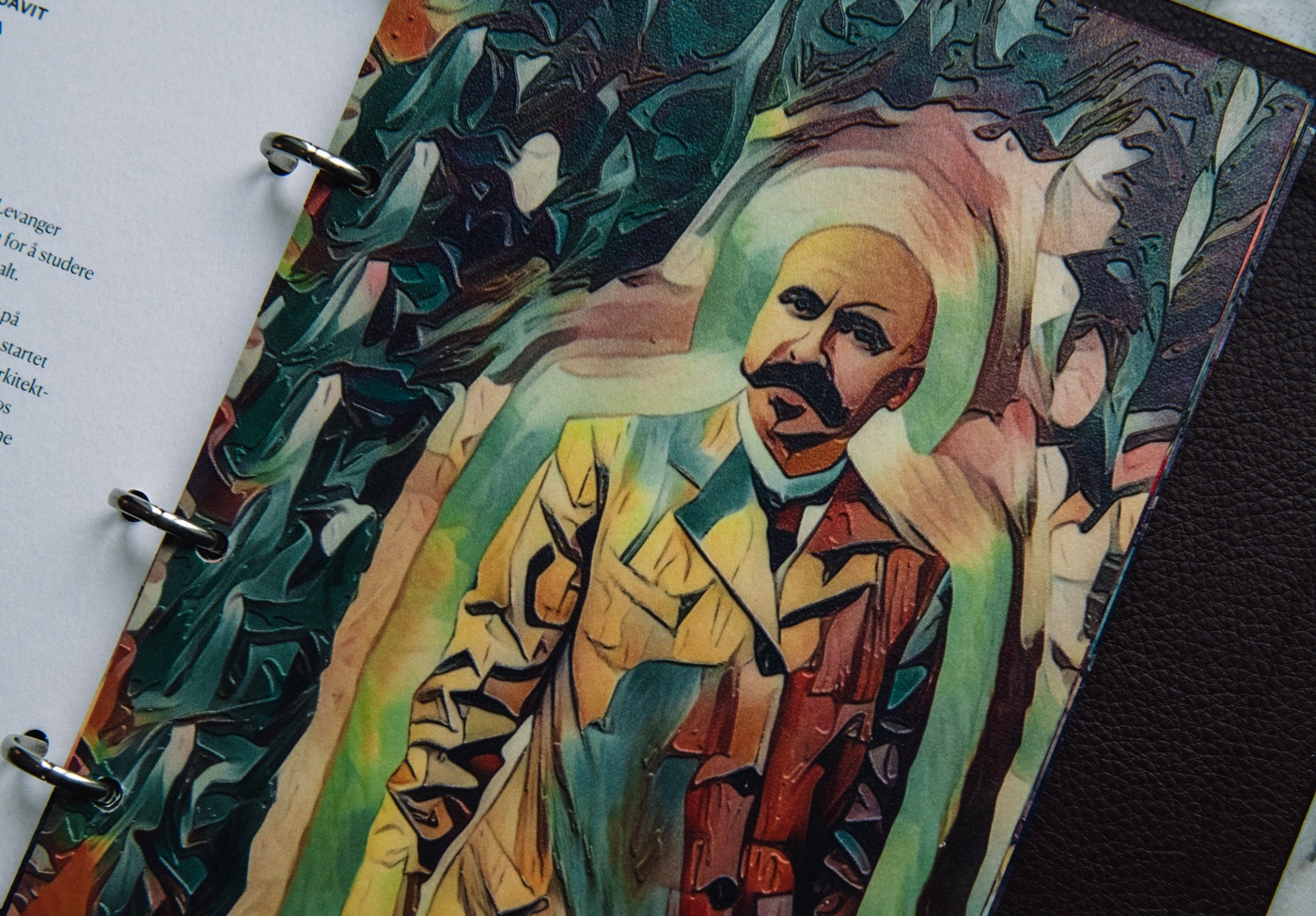
Bar menu artwork by Øyvind Lindgjerdet, Britannia Bar. Photo: Nikol Herec
Some ideas need their own glass
Øyvind joined Britannia as the hotel was entering its new era, after a three-year renovation transformed the historic property into the five-star hotel that reopened in 2019. It was a rare moment to step into a place: the history was already there, but almost everything else was being reconsidered. For someone whose natural instinct is to keep pulling at an idea until it becomes something more interesting, the timing was unusually good.
“It was Britannia that gave me the platform to go even deeper. When I joined Britannia at 29, I finally had the resources, the team, and the creative freedom to push things forward.”
That freedom changed the scale of the work. Britannia is its own little universe of restaurants and bars, from Speilsalen and Palmehaven to Jonathan Grill, Britannia Bar and Vinbaren, each operating on its own frequency. Øyvind started building outward from the glass, thinking not only about what a guest would drink, but what they would see, hold and remember. Add in the cocktail program at Nye Hjorten Teater, and the job becomes less about repeating a signature and more about knowing how to move between worlds.
“Here I’m not just running bars. I’m building concepts, menus, and storytelling experiences. I still work the floor and behind that bar when needed. The connection to guests keeps me grounded.”
That last part matters. The work can become elaborate, but Øyvind is still close enough to the guest to know when an idea has become a little too pleased with itself. The floor gives him the correction. It tells him whether the story lands, whether the glass feels right in the hand, whether all that thinking has turned into something people actually want to spend time with.
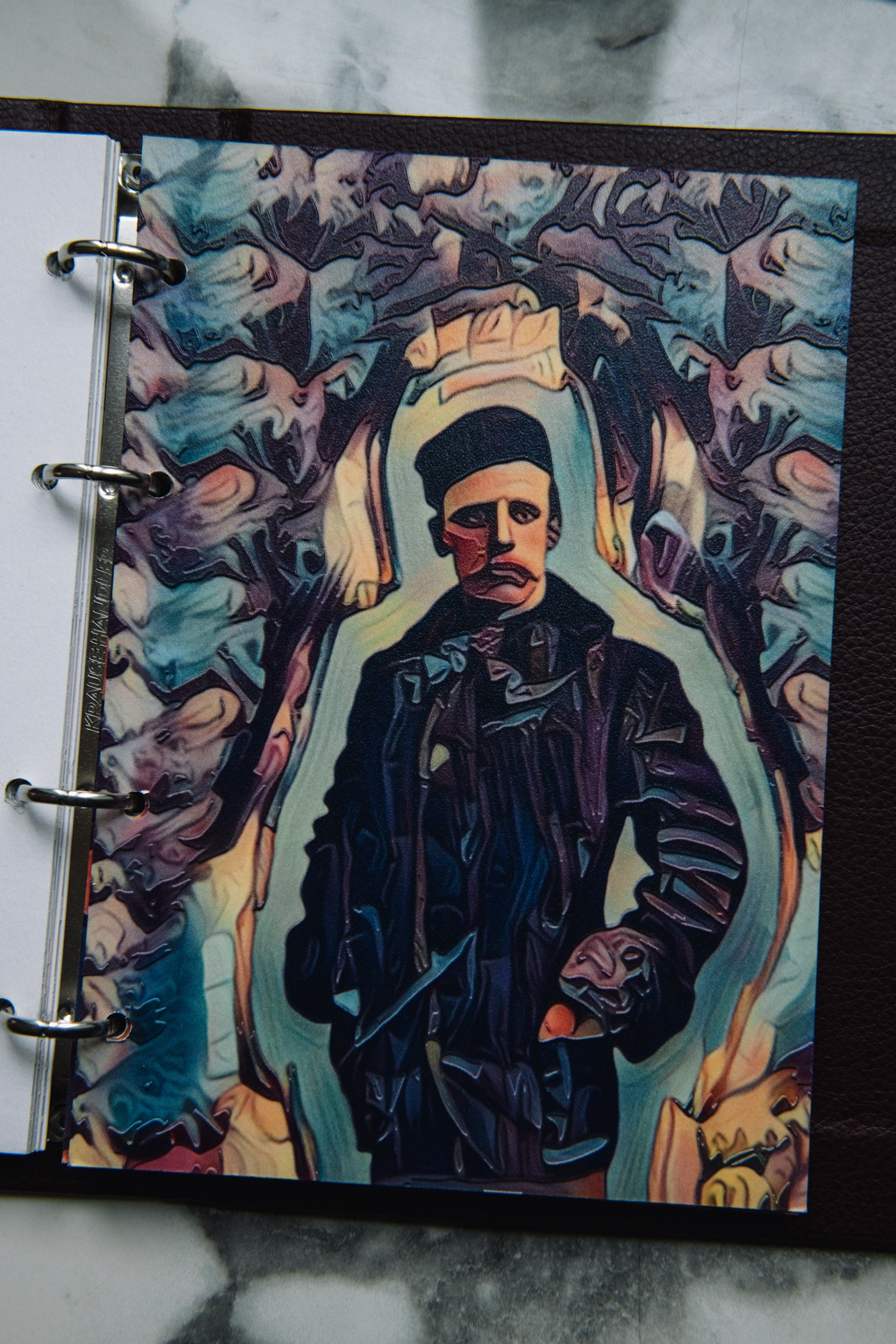
Bar menu artwork by Øyvind Lindgjerdet, Britannia Bar. Photo: Nikol Herec
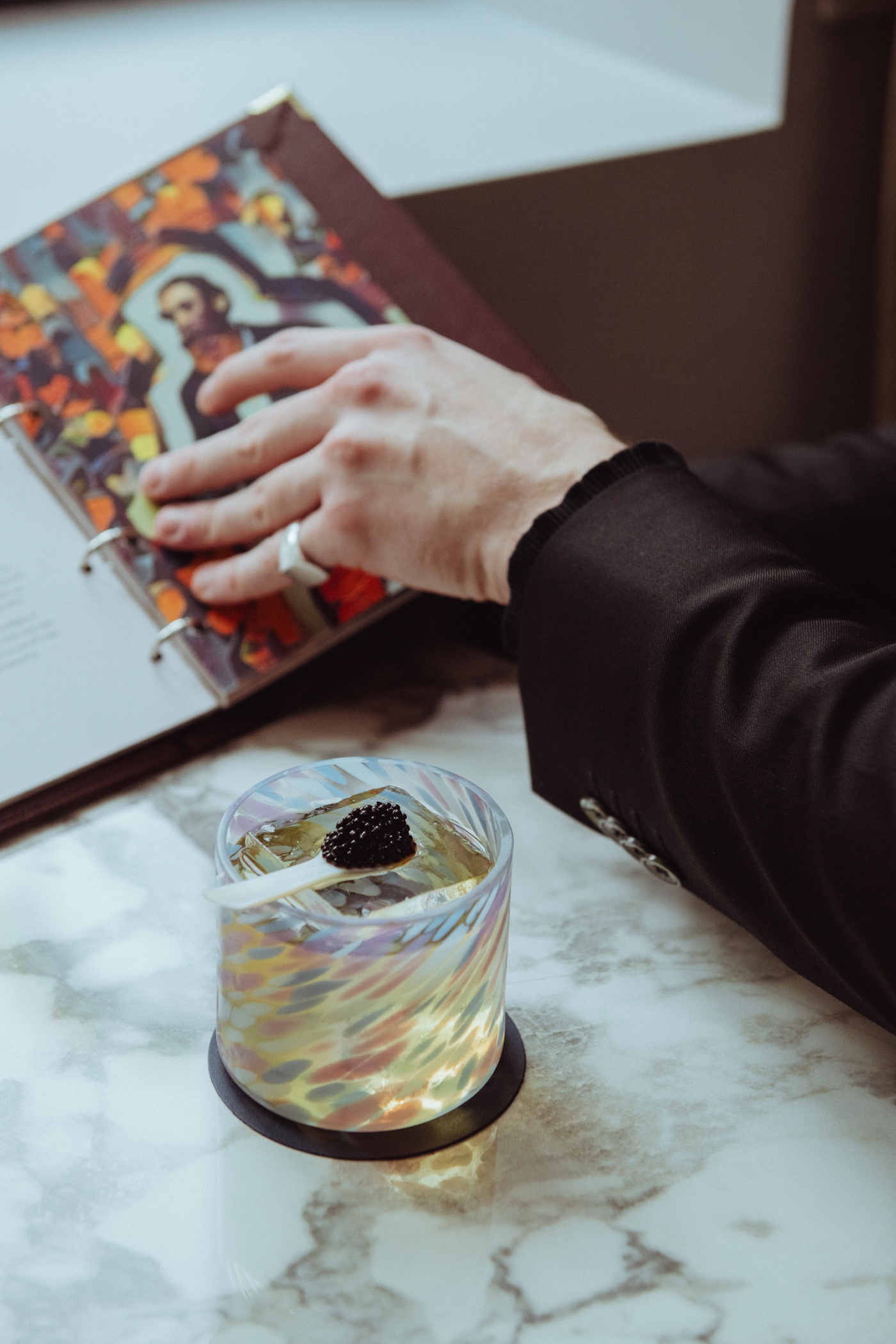
Øyvind Lindgjerdet, Britannia Bar. Photo: Nikol Herec
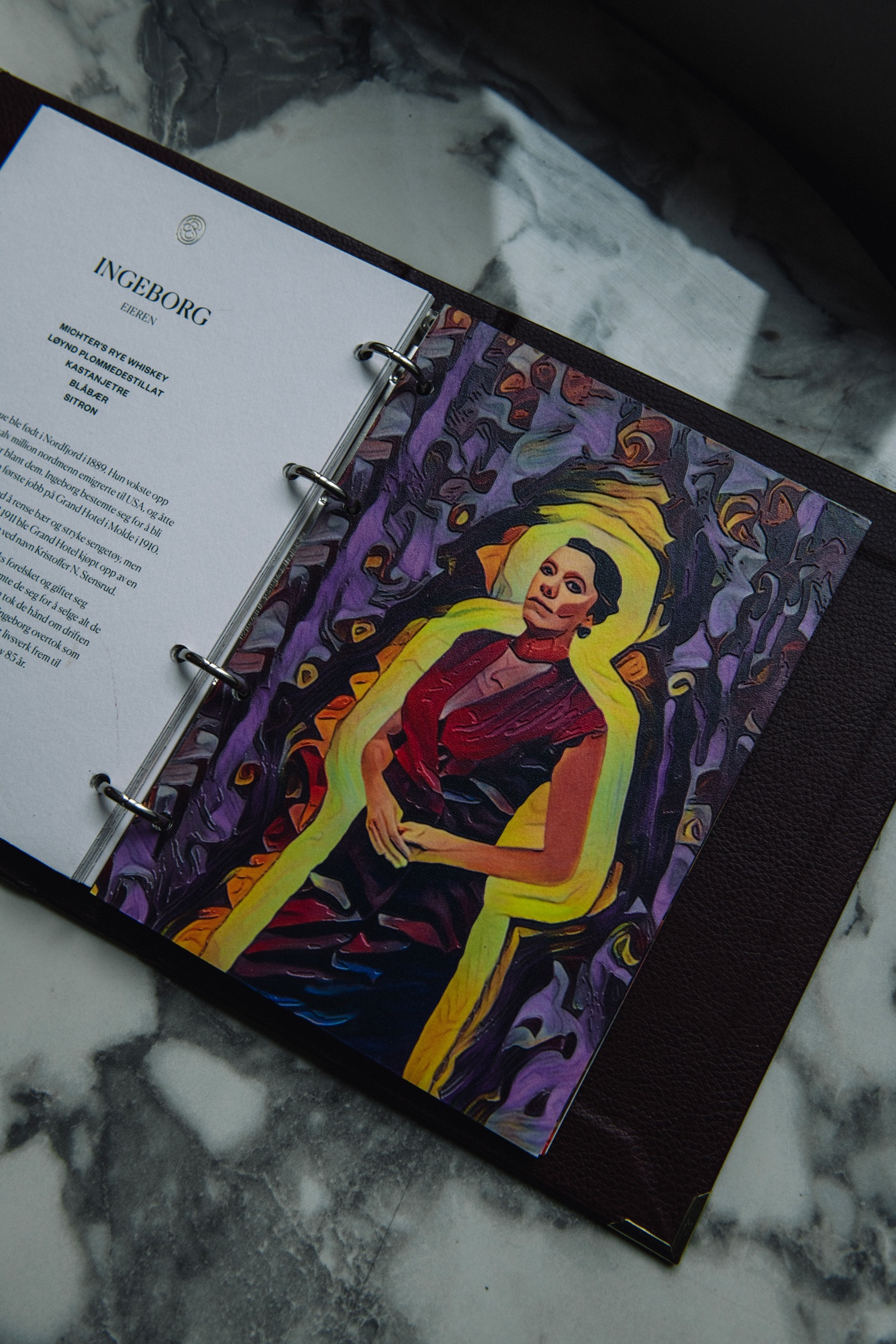
Bar menu artwork by Øyvind Lindgjerdet, Britannia Bar. Photo: Nikol Herec
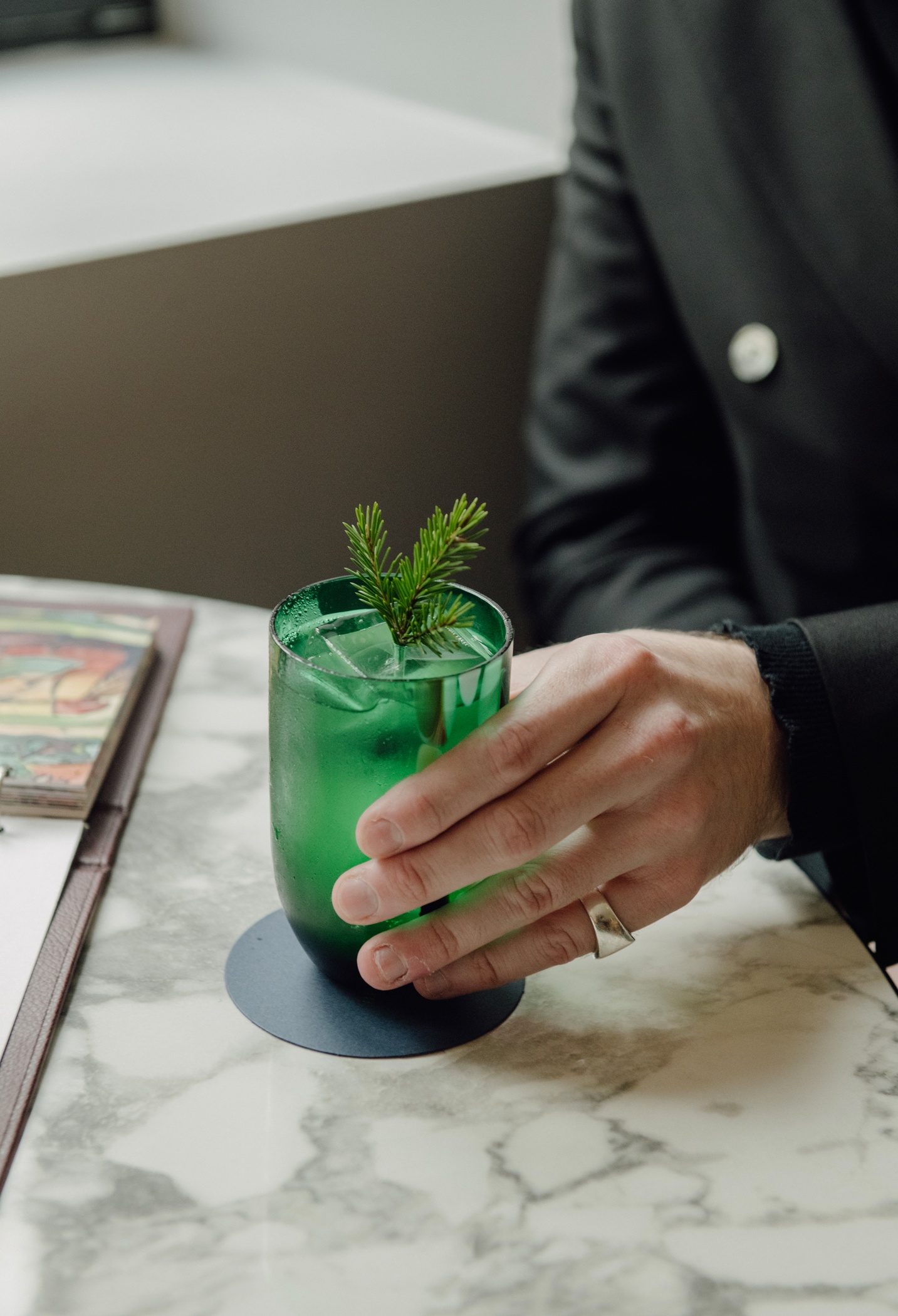
Øyvind Lindgjerdet, Britannia Bar. Photo: Nikol Herec
“The menus I create are rooted in real people and stories. I design the drinks, source glassware, craft the stories, and this time created the artwork digitally with 3D printing as a unique touch. It’s all very personal.”
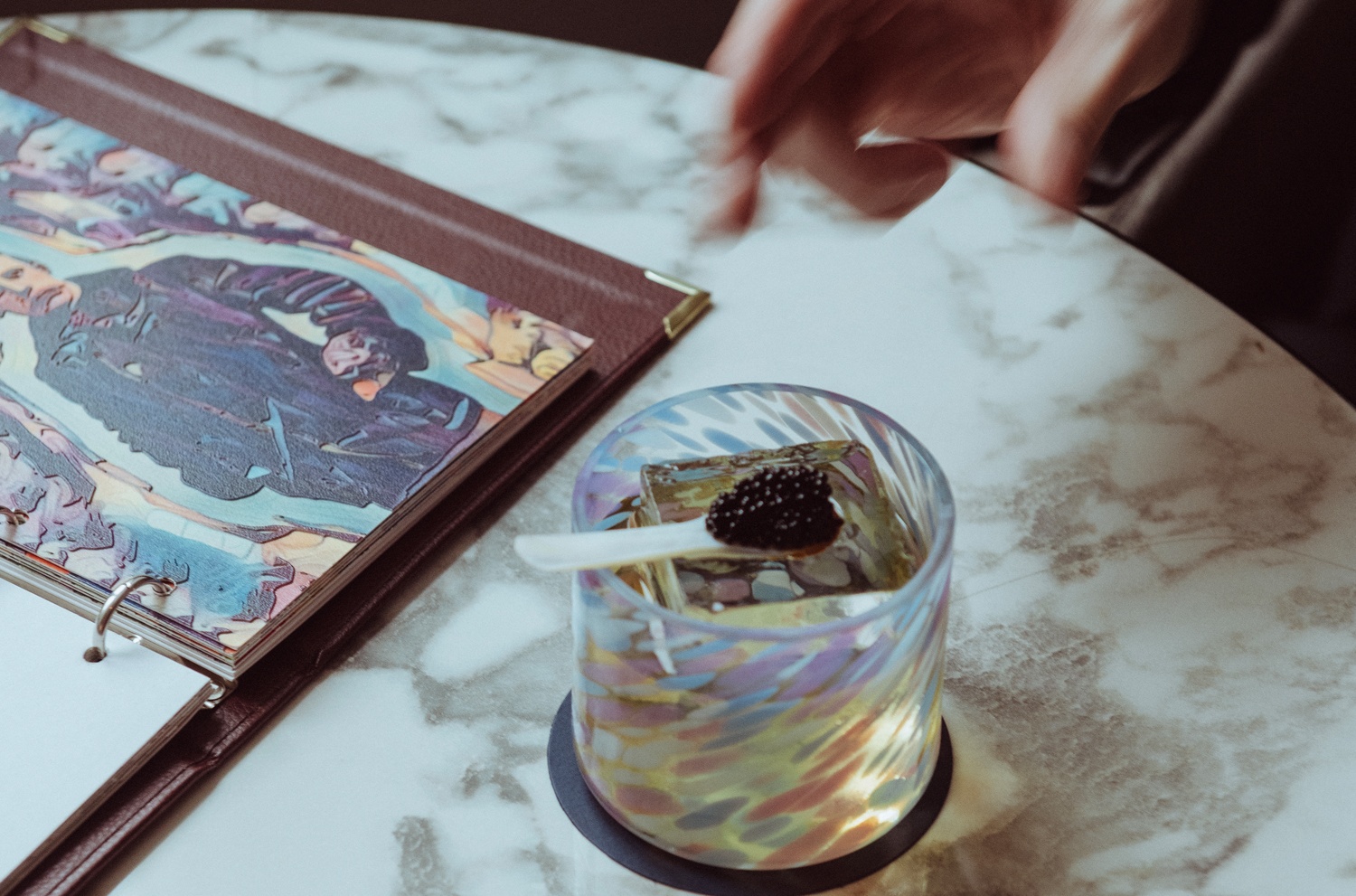
And personal, in Øyvind’s case, can become surprisingly tangible. For one project, nearly 100 glasses were hand-painted in collaboration with Håkon Bleken, making each one a small original before anything had even been poured into it. His Portraits menu went considerably further down the rabbit hole, taking nearly two years to develop and drawing on archival research and conversations behind the people and stories it would eventually bring to the bar. The best ideas are the ones where all that work eventually disappears into the experience. A guest does not need to catch every reference or understand every hour of research behind it. They only need to feel that the details belong together.
The experiments have not gone unnoticed. Britannia Bar has collected a growing stack of recognition, including Best Cocktail Bar Norway and Best Cocktail Menu Norway at the 2025 Bartenders’ Choice Awards, while Øyvind himself was named Best Bartender Norway. In 2026, the bar took Best Cocktail Menu for the second year running, along with the People’s Choice Award, and earned a place in 50 Best Discovery.
That instinct now runs through much of what he does. Different rooms ask for different versions of the idea. Speilsalen wants intimacy. Britannia Bar can carry more theater. Nye Hjorten Teater comes with an actual stage, which feels almost tailor-made for someone who already thinks this way. The challenge is not to stamp the same signature everywhere, but to understand the character of the place and sharpen what is already there. The cocktail is still there, obviously. It just happens to be carrying a lot more than alcohol.
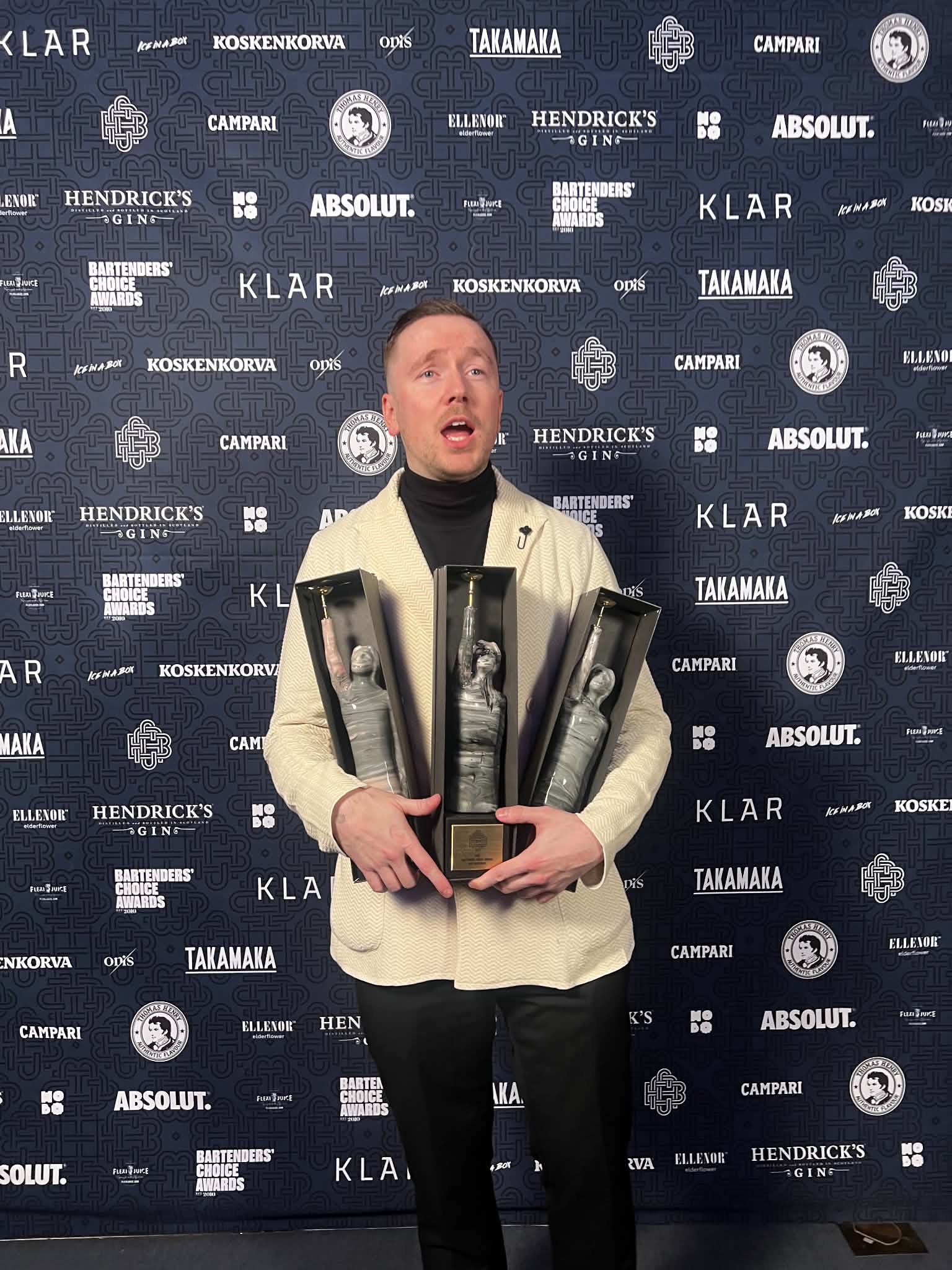
Bartender's Choice Awards
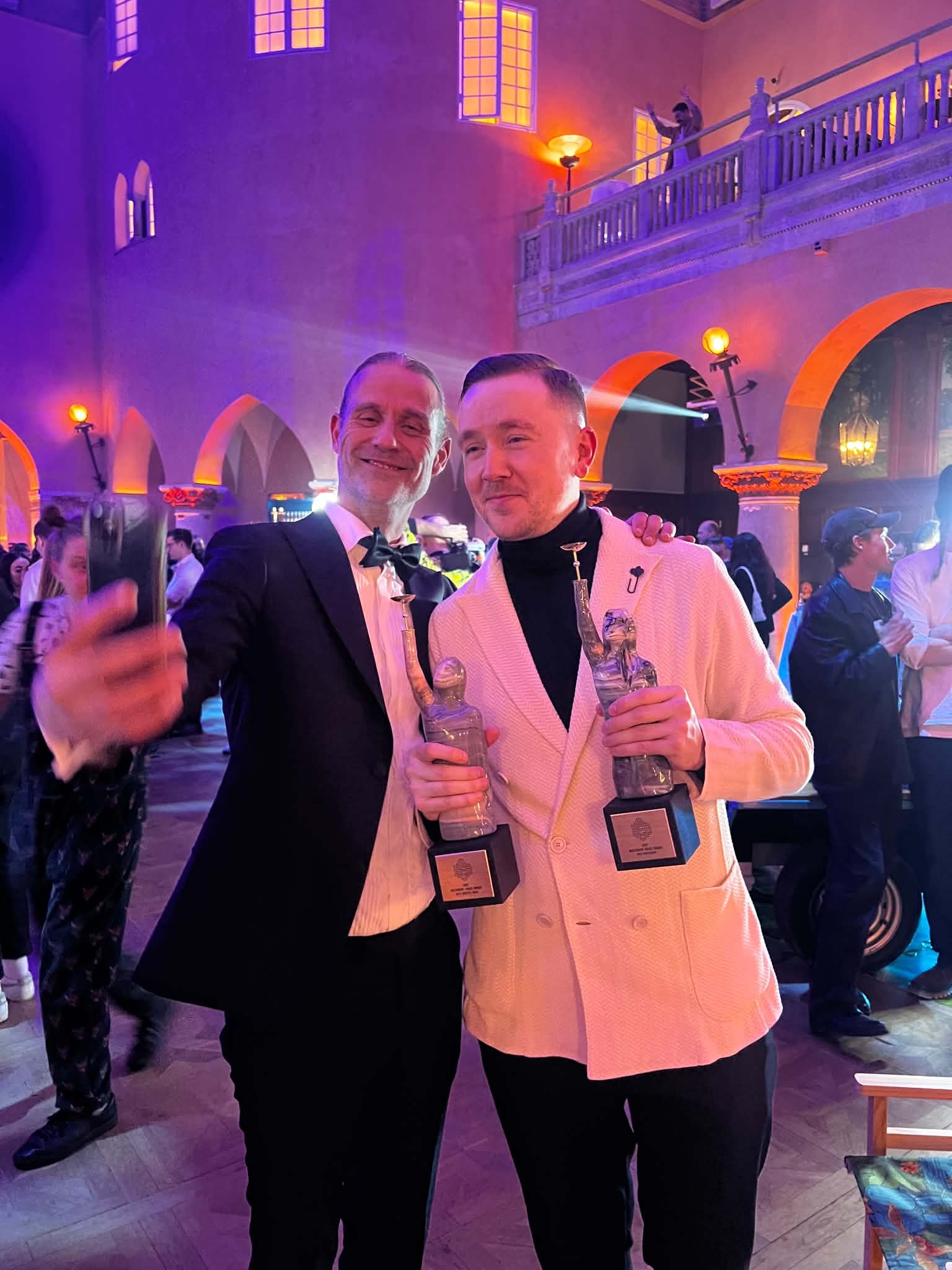
Bartender's Choice Awards
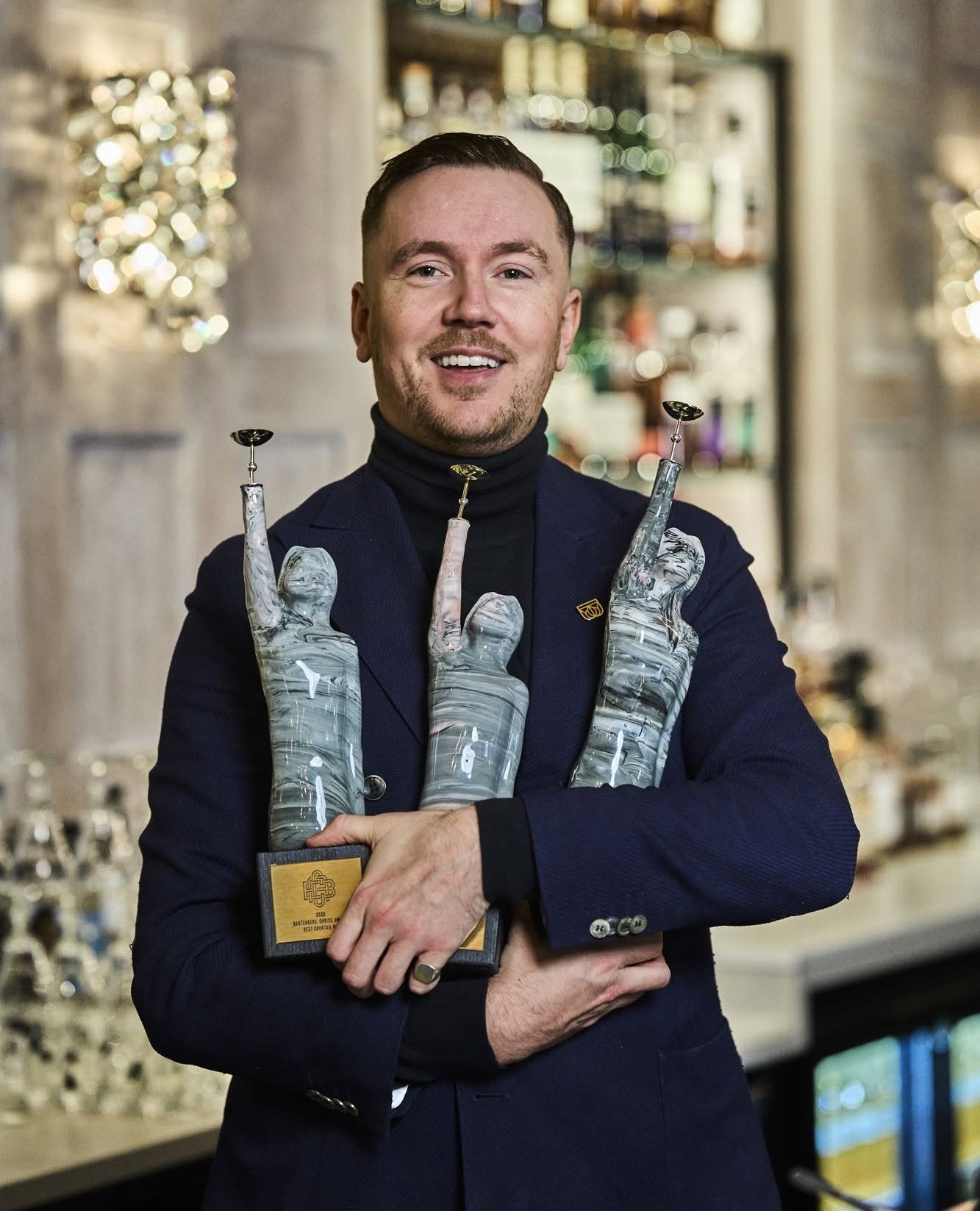
Øyvind holding Bartender's Choice Awards
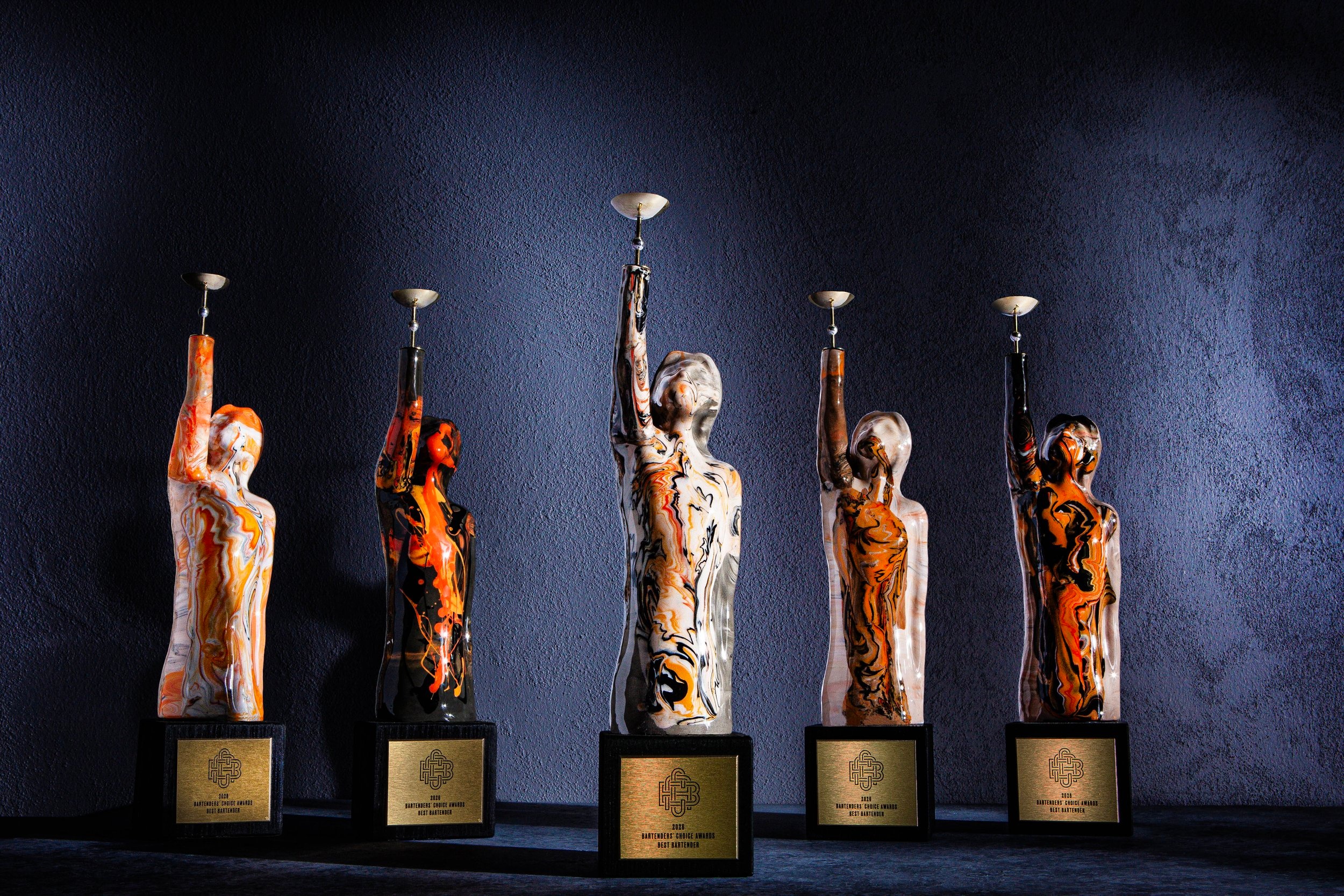
Bartender's Choice Awards, Britannia Hotel
Read the Room
For all the dry ice, hand-painted glassware and hours spent disappearing into whatever subject has caught his attention that week, Øyvind’s view of hospitality is almost suspiciously simple: pay attention. A beautiful room helps. So does good music, expensive spirits and ice that has clearly had a better upbringing than most of us. But none of it can rescue a bartender who has no feel for the person sitting three feet away.
“I’ve learned to read a room in seconds, and shape the story to fit who’s in front of me. Whether it’s older ladies, business guests, or 23-year-old bros, I still show up as myself. I just lean into different sides of who I am.”
Years behind the bar have made that adjustment almost automatic. Some guests want the full story. Others would prefer their Negroni without a dissertation attached. The skill is knowing the difference before anyone has to spell it out. Øyvind doesn’t see that as playing a role. If anything, it is the opposite. “That kind of connection, that ability to adapt without faking it, is one of the most underrated parts of hospitality. It’s what makes a story land. When it actually resonates with the person hearing it.”
There is something nicely inconvenient about this truth for an industry that can obsess over interiors, concepts and increasingly elaborate ways of serving liquids. At some point, somebody still has to make another person feel welcome.
“You can’t fake hospitality. The furniture, the music, the spirits, all of that matters. But if your team doesn’t genuinely care, none of it works. We build regulars through real connection, not ego.”
It also explains why, even now, Øyvind still likes being on the floor. From far enough away, his job is about running bars, developing menus and building concepts. Up close, it is reading the couple who want to be left alone, remembering a returning guest, knowing when a story will make the drink better and when the most elegant thing you can do is simply put the glass down and let them enjoy it. After years spent learning how much can go into a cocktail, Øyvind may have become equally good at knowing when to leave something out.
Author's profile
McKenna Starck
Trondheim Brand Manager
McKenna works with the development of Trondheim’s city brand and Trondheim.com, with a focus on brand strategy, content and the overall digital experience.